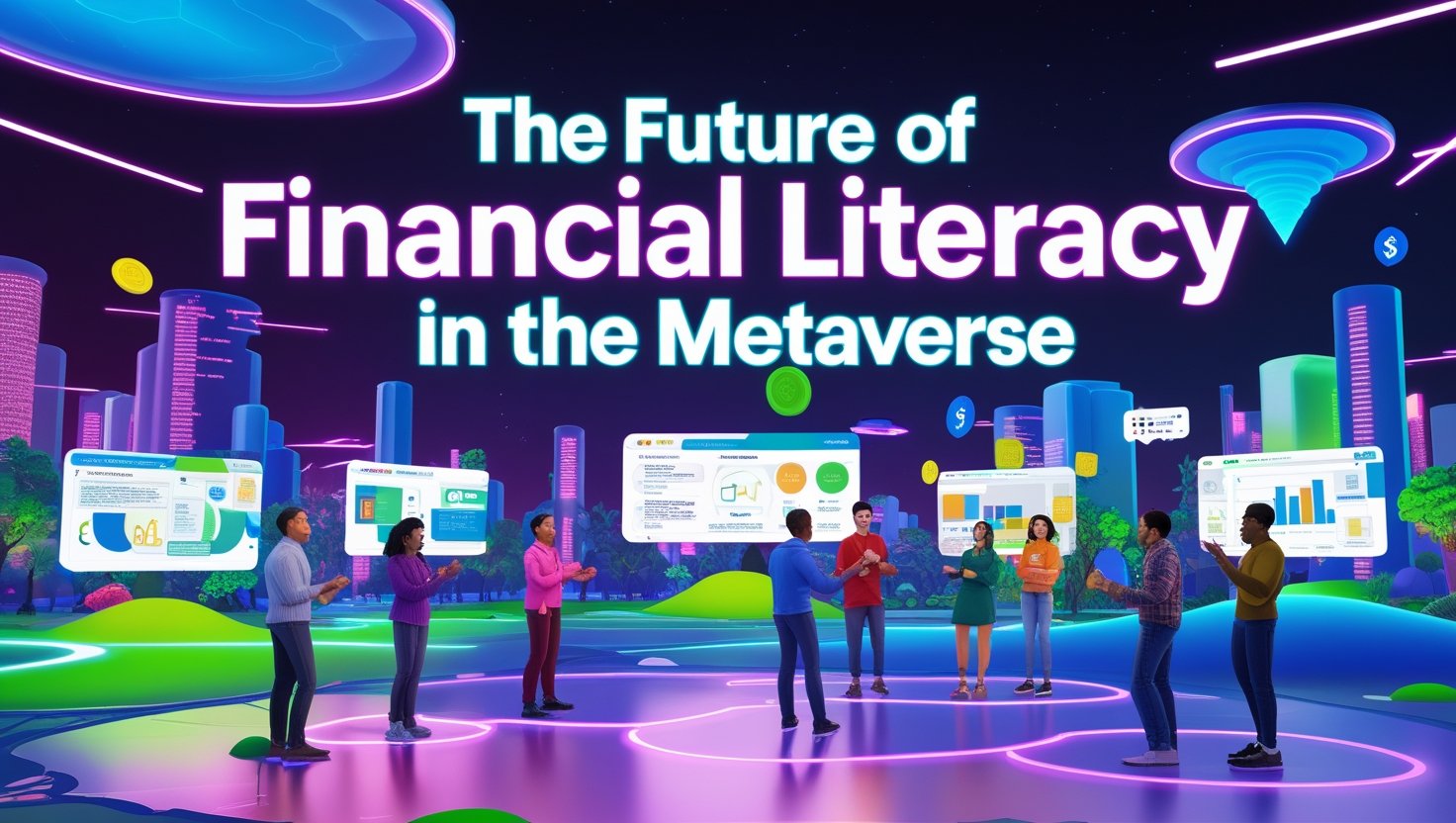
In today’s era, the advancement of technology has transformed every field, and education is also not keeping pace with this. When we talk of financial literacy, it means that a person should know how to understand, manage, invest, and save their money. But now that the world is going virtual, platforms like the metaverse have come into existence, it is necessary that the future of financial education is also understood in a new way. Metaverse is a virtual world where people interact digitally, do business, and buy properties. In such a situation, traditional finance education models now seem outdated. Financial concepts can be taught through new tools and immersive environments, such as budgeting, crypto investing, management of virtual assets, etc. These new tools are not limited to theory only, but also allow practice, where people can learn from their mistakes without losing real money.
If we teach financial sense to the youth while living in a digital world, then they can not only make better decisions in their real lives but also start understanding virtual economies. This introduction is important so that we can understand why the future of financial literacy in the metaverse can prove to be a game-changer and how it is giving new dimensions to digital learning. Today’s student does not just learn from books, but rather understands more deeply through virtual experiences.
What Is the Metaverse and Why Does It Matter for Finance
The Metaverse is a digital world where people interact, work, shop, and entertain themselves through their avatars. This world runs like the real world, but everything is virtual. In it, you can buy virtual land, wear digital clothes, and trade everything with cryptocurrencies. When such an economy is developing, the importance of financial literacy increases even more. People in the Metaverse will have to understand how their money is being invested in virtual assets, what their risk is, and how their value increases or decreases. Terms like crypto wallets, NFTs, blockchain, and smart contracts, which were previously known only to experts, are now important for the common user to understand as well.
When you invest in any digital thing, you have to learn new tools and frameworks apart from budgeting and saving, like traditional finance. For example, if you invest money in a metaverse land project, you will have to understand its demand, utility, and future projection; otherwise, you may suffer losses. Financial education is no longer just about how you pay your bills, but it is also important to understand how money works in the virtual world. Metaverse is not just a trend; it is a new economic reality in which every user should make smart decisions, or else it is easy to become a victim of financial exploitation even in the digital world.
How the Metaverse Makes Financial Education Engaging
The most powerful aspect of the Metaverse is that it makes traditional learning interactive and engaging rather than boring and theoretical. When we talk about financial literacy, most people think it is just a game of numbers and formulas. But the metaverse is changing this narrative. In this virtual world, financial education is being transformed into a game-like experience where students or users are placed in real scenarios. For example, a virtual city where you have to manage a budget, pay rent, invest, and face unexpected emergencies. Such experiences not only teach theory but also have a practical effect.
When the user makes a decision himself and sees the outcome, the learning becomes deeper. Another benefit of gamified learning is that it includes rewards and progress tracking, which increases motivation. When you complete a challenge and get points or badges, it increases consistency and interest. Teachers and financial educators can also design customized experiences for students using this medium. This method is especially effective for the young generation, as they are already exposed to gaming and digital experiences. In short, the metaverse is transforming financial literacy from a boring subject into a fun, engaging, and real-life applicable skill where people get entertained along with learning.
Challenges and Risks of Financial Literacy in the Metaverse
While the metaverse opens new doors for financial education, it also poses some challenges and risks that are not present in traditional systems.
The first challenge is that of misinformation. In the metaverse, it is very easy for anyone to become an expert and give financial advice to others. If users do not develop the habit of critical thinking and verification, they can easily become victims of fraud.
Another risk is that the concept of money gets distorted in virtual economies. When you buy digital currencies with real money and use them in games or NFTs, sometimes people forget the real value of money. They think these are just numbers when in reality, they are losing real money. Apart from this, addictive behavior is also a big issue. Virtual rewards and instant gratification make people take impulsive decisions like buying unnecessary NFTs or investing money in speculative crypto coins.
The third challenge is access. Not everyone has high-speed internet and advanced devices to experience the metaverse. This digital divide makes equal access to financial literacy difficult. At the same time, the regulatory framework has not yet evolved. Many digital investments and transactions do not fall under the ambit of legal protection, which harms the end user. Therefore, it is necessary that digital safety and ethics should also be taught along with financial literacy in the metaverse so that people learn to take not only smart but also safe decisions.
The Role of Institutions: Schools, Banks, and Tech Platforms:
When we talk about financial literacy in the context of the metaverse, it is not just an individual responsibility; the role of institutions also becomes very important. First of all, let’s talk about schools. Today’s students are growing up in a digital world, so they need immersive and virtual experiences in addition to the traditional classroom. If schools adopt metaverse tools, they can help students practically understand concepts like budgeting, investing, and digital asset management. A virtual classroom where students play a simulation of budgeting by becoming avatars can help develop real-life financial decision-making skills. On the other hand, the role of banks is also evolving. Banks are not just limited to branches; they are now creating virtual customer service centers and financial literacy portals in the metaverse where people can take guidance from counsellors through their avatars.
This approach is also helpful for those who cannot visit the branch physically. Along with this, tech platforms like Meta, Roblox, and Decentral and are also joining in this mission. These platforms are providing spaces and tools for educational content where interactive and gamified financial education is possible. Collaboration between all of these is essential to create a structured, safe, and authentic learning environment within the metaverse. When schools provide education, banks explain financial tools, and tech platforms provide the medium, only then can future generations be made smart and informed financial citizens in the metaverse.
Conclusion:
As the world is moving towards the metaverse, the concept of financial literacy is also taking new steps. Now it is not enough to just learn how to save money or how to invest it, but it is also important to understand how money works in the digital world. Today’s student or user is not just a part of the real world; they also spend time in virtual environments where the digital form of real money is running. Therefore, we have to prepare a generation of people who are digitally aware, who understand crypto assets, NFTs, blockchain, and metaverse economies. To achieve this awareness, one cannot rely only on schools or colleges. Every branch, every institution, and every platform will have to work together.
When we make financial concepts simple and engaging through gamified learning, interactive tools, and immersive experiences, people get interested and they absorb the concepts easily. But along with this, the aspect of safety, regulation, and ethical usage is also very important. It is important to create such a generation that not only understands digital finance but also manages it responsibly. The future of the Metaverse is as exciting as it is complex. Therefore, if we promote financial literacy today through modern tools, tomorrow we can create a society that is not only technology savvy but is also financially strong and secure.
FAQs:
Q1: What is the Metaverse, and why is it important for financial literacy?
Answer: The Metaverse is a virtual world where people interact, work, and trade using digital avatars. It operates like a real economy, but everything is digital—from virtual land to crypto assets. Financial literacy is crucial here because users must understand how to manage, invest, and protect their money in this virtual environment. Concepts like blockchain, NFTs, crypto wallets, and smart contracts are essential to avoid financial losses in the metaverse economy.
Q2: How does the metaverse make learning about money more engaging?
Answer: The metaverse transforms traditional financial education into an interactive and gamified experience. Instead of just reading theory, users can enter virtual worlds where they simulate real-life situations like budgeting, investing, and dealing with financial emergencies. These simulations help learners make decisions, experience consequences, and stay motivated through rewards like points and badges, making financial education more practical, fun, and memorable.
Q3: What are the biggest risks of teaching financial literacy in the metaverse?
Answer: Some major risks include misinformation, where unqualified users give bad financial advice; distorted money value, where users treat digital currencies like game points and forget real-world consequences; and addictive behavior, like compulsive NFT buying. There’s also a digital divide many people lack access to the internet or devices to participate, and legal grey areas where many digital transactions are not protected by regulations. These issues highlight the need for ethical and secure financial education in the metaverse.
Q4: What role do schools, banks, and tech platforms play in metaverse financial education?
Answer: Schools can use virtual simulations to teach students how to manage money, budget, and invest. Banks can offer virtual customer support and create financial literacy hubs within the metaverse. Tech platforms like Meta or Roblox provide the tools and spaces where these learning experiences can happen. When all these institutions collaborate, they can build a safe and effective environment for financial education in the digital world.
Q5: How can financial literacy in the metaverse benefit future generations?
Answer: By learning financial skills in immersive, digital environments, young people can become more financially aware and confident. They will not only understand real-world money but also how digital assets work. With this knowledge, they can avoid scams, make smart decisions, and take control of both their physical and virtual finances. A generation that understands the metaverse economy will be better prepared for the future of global finance.